Answer A Specific Material Question
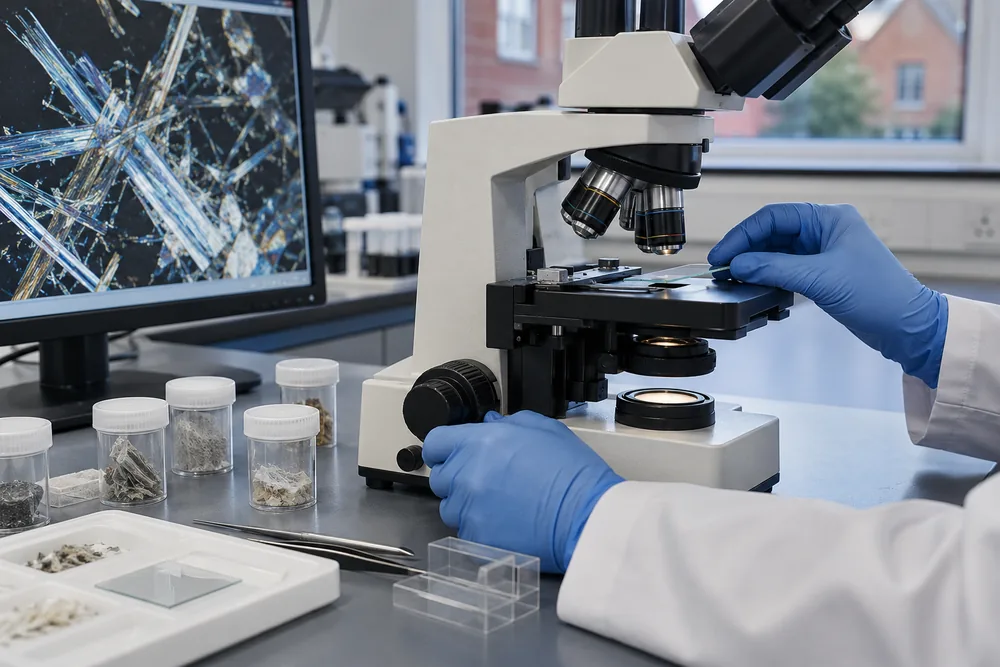
Asbestos testing establishes whether a representative sample contains asbestos. It can help when a maintenance team encounters an unfamiliar board, ceiling finish or floor material and needs a reliable identification before deciding how to proceed. A photograph, colour or approximate installation date cannot provide the same answer as analysis.
For Southampton businesses, testing may be a focused instruction or part of a wider survey. Tell us where the material is, what activity is proposed and whether it has been damaged. That context helps distinguish a small sampling visit from a situation requiring broader investigation or immediate control of the area.
Testing And Surveying Serve Different Purposes
A laboratory result relates to the sample submitted. It does not establish the condition, extent or accessibility of every similar-looking material in the premises. Separate products can appear alike, while a single construction element may contain several layers with different compositions.
If you need an asbestos register for the building, a management survey is usually the more relevant starting point. If a contractor will disturb concealed fabric, discuss a refurbishment survey. Testing one accessible surface should not be used to assume that the whole room, floor or building has been investigated.
Competent Sampling Matters
Sampling can release fibres, particularly when a material is friable or already deteriorating. HSE advises that sampling is undertaken by a trained and competent person. Do not snap a piece off, drill into it or sweep debris into a bag while waiting for advice.
The sampler needs to assess how to reach the material, control the immediate area and leave the sampling point appropriately treated. A sample that cannot be linked to its location has limited value to the person managing maintenance. Agree the material references and who will receive the results before the visit.
Laboratory Analysis And Accreditation
Commissioned asbestos sample analysis must meet the relevant requirements of the Control of Asbestos Regulations 2012. Use a UKAS-accredited laboratory with the appropriate ISO/IEC 17025 scope. Check the laboratory's current schedule rather than relying on a logo or a general statement about quality.
HSG248, Asbestos: The Analysts' Guide, describes analytical procedures and relevant safety considerations. Ask which organisation will perform the analysis and how its result will be connected to the site sample reference. This website does not claim laboratory accreditation, and the appointed provider's details should be confirmed with the quotation.
How A Sampling Instruction Progresses
Start with a description of the material, the room and the planned activity. The sampling scope can then identify the locations to inspect and any access restrictions. If the condition suggests a more urgent risk, control of the area takes priority over obtaining a routine sample.
At the visit, the competent sampler records the location and collects suitable material under the required controls. The laboratory analyses the sample and issues a result. The final handover should connect the site notes and laboratory identification so you can update records and decide what work is permissible next.
Understanding Positive And Negative Results
A positive result confirms asbestos in the analysed sample. The next decision depends on the material's condition, position and likelihood of disturbance, rather than the result alone. Intact material can sometimes remain managed in place, while work affecting it may require specialist removal arrangements.
A negative result should be read with the sample description and scope. It does not automatically clear adjacent products, hidden layers or inaccessible sections. If the laboratory notes an unsuitable sample or the site material varies, seek clarification before using the result as the basis for invasive maintenance.
What Affects Testing Costs
Costs reflect the number of distinct materials, sampling locations, accessibility and the laboratory service required. A visit to one accessible office room is different from sampling across multiple industrial units. High-level access, escorts, restricted hours and additional site controls can change the instruction.
Ask the quotation to distinguish the site visit, sampling, analysis and reporting. If a construction decision depends on the result, explain the date and ask the provider to confirm achievable timings. Do not assume that urgent analysis is available or that a laboratory result includes advice on an entire building.
Turn The Result Into A Building Decision
Keep the result alongside the matching location record, photographs and any survey information. Give the relevant evidence to whoever is authorising maintenance, and update the asbestos register where necessary. A result stored in an inbox may never reach the contractor who needs it.
Use the enquiry form to describe the suspect material and the activity that has prompted the question. Include your commercial premises postcode and whether an existing survey refers to the location. We can then help establish whether targeted testing, a survey or a more detailed risk assessment is the appropriate next step.
The Process At A Glance
- Describe the suspect material, location and proposed disturbance.
- Arrange competent sampling with suitable access and local controls.
- Obtain laboratory identification linked to the site sample reference.
- Review the finding in context and update the relevant building records.
Technical references: HSE survey guidance, HSE provider guidance and Control of Asbestos Regulations 2012.
Your Questions, Answered
Can You Identify Asbestos From A Photograph?
Asbestos cannot be confirmed from a photograph alone. A photograph can help explain the location and apparent condition, but laboratory analysis of a representative sample is needed for definitive identification. Do not disturb the material to take a better picture or collect a sample yourself while arranging professional advice.
Does A Negative Sample Clear The Whole Building?
A negative asbestos sample does not clear the whole building. It applies to the material represented by that sample and must be read alongside the sampling notes. Different layers, later repairs and inaccessible materials can need separate investigation, particularly when a contractor intends to strip finishes or alter hidden building fabric.